

The Best Whisper Alternatives for Speech-to-Text
Whisper by OpenAI is one of the most powerful and freely available tools for automatic speech recognition. It's versatile, accurate, and open source. But not everyone wants—or is able—to work with Python, install Whisper locally, or rely solely on manual setups. Maybe you need real-time capabilities, business integration, or built-in meeting summaries.
In this article, we’ll explore the top alternatives to Whisper, from cloud-based APIs to smart all-in-one tools with AI automation.
One thing worth knowing before you start: OpenAI itself has moved beyond the original open-source Whisper. In March 2025 it released the managed gpt-4o-transcribe and gpt-4o-mini-transcribe models, which report lower error rates than Whisper on clean English audio, and an open-source large-v3-turbo variant that runs several times faster. So "a Whisper alternative" today can mean anything from a newer OpenAI model to a completely different provider. Below we focus on the leading independent options.
What to Look for in a Whisper Alternative
Before you commit to a Whisper alternative, it's important to clearly define your goals, technical constraints, and preferred working environment. Not every tool is designed for every situation, and the best fit will depend heavily on your specific needs - whether that's automation, offline capability, developer flexibility, or team collaboration. Here’s a breakdown of common use cases and the tools best suited for each scenario:
- For automated meeting transcription and task tracking: Choose tools like Sally that can transcribe meetings, summarize discussions, and integrate with project management tools like Asana or Trello.
- For transcribing interviews, podcasts, or voice notes: Opt for flexible APIs like Google, Microsoft, or AssemblyAI that allow custom workflows and developer control.
- For local, offline transcription: Use Whisper itself or alternatives like Vosk that run on your own machine and offer full data control.
Now, let’s dive into the best Whisper alternatives available today.
At a Glance: Whisper Alternatives Compared
Here is a quick overview of the seven alternatives covered in this article, so you can see at a glance which one fits your use case before reading the details.
| Tool | Best for | Deployment | What's new in 2025/2026 |
|---|---|---|---|
| Google Cloud Speech-to-Text | Scalable cloud API, many languages | Cloud | Chirp 2 and Chirp 3 models (Universal Speech Model) cover well over 100 languages |
| Microsoft Azure AI Speech | Microsoft and Teams ecosystems, enterprise | Cloud or container | Fast Transcription API returns results faster than real time |
| IBM Watson Speech to Text | Regulated industries, custom models | Cloud or on-premises | Next-generation models; smaller language set |
| Vosk | Fully offline, low-power hardware | Self-hosted (open source) | Stable and lightweight; still no built-in punctuation or diarization |
| AssemblyAI | Developers needing metadata and insights | Cloud | Universal model with roughly 99 languages and multilingual streaming |
| Deepgram | Real-time, high-volume transcription | Cloud or self-hosted | Nova-3 model, sub-300ms latency, 50+ languages |
| Sally | Automated meeting notes and tasks | Cloud (hosted in Germany) | Auto-joins Zoom, Microsoft Teams, Google Meet and Webex; GDPR-compliant |
Google Cloud Speech-to-Text
Google offers a powerful, cloud-based speech-to-text API. Its newer Chirp models (Chirp 2 and Chirp 3, built on Google's Universal Speech Model) now cover well over 100 languages and dialects, a big jump from the earlier generation. It's known for its ease of use, strong real-time capabilities, and excellent scalability, making it a favorite among developers and businesses alike.
Pros of Google Cloud STT:
- Real-time transcription
- High accuracy even with phone-quality audio
- Easy API access with tools like Zapier
- Customization via phrase hints
Cons of Google Cloud STT:
- Paid beyond the limited usage
- No local data processing
Great for developers needing a reliable, cloud-first solution with strong Google ecosystem integration.
Microsoft Azure Speech
Now offered as Azure AI Speech (part of the Azure AI Foundry tools), Microsoft’s solution supports advanced speech recognition, including speaker identification and real-time translation. A newer Fast Transcription API can return results synchronously and faster than real time, which is handy for processing recorded files quickly. It’s designed for scalability and deep integration into the broader Microsoft ecosystem, making it especially appealing for enterprise users and those already using Microsoft tools like Teams or Office 365.
Pros of Azure:
- Supports many dialects and real-time streaming
- Integrates with Microsoft Teams and Office
- Enterprise-grade container option for local use
Cons of Azure:
- Requires Azure account setup
- Slightly more complex onboarding
Ideal if you're already in the Microsoft environment and want seamless integration.
IBM Watson Speech-to-Text
IBM Watson provides a flexible, business-grade voice recognition solution that can be deployed either in the cloud or on-premise. Designed with enterprise needs in mind, it offers customizable language and acoustic models, making it a robust option for organizations that require tailored speech processing and strong data privacy compliance.
Pros of IBM Watson STT:
- Language customization
- Speaker separation and phone call optimization
- Can run locally for high-security needs
Cons of IBM Watson STT:
- Smaller language selection
- The interface is more technical
Watson is well-suited for regulated industries like finance or legal, where control and customization are crucial.
Vosk
Vosk is a lightweight, open-source tool designed for fully offline speech recognition. It operates efficiently even on low-performance hardware, making it ideal for edge devices, embedded systems, or environments with strict data privacy requirements where internet connectivity is limited or unavailable.
Pros of Vosk:
- No internet required
- Runs on Raspberry Pi, Android, and other platforms
- Open source and free
Cons of Vosk:
- Less accurate than Whisper or commercial APIs
- Missing features like punctuation and speaker labels
Perfect when you need privacy, offline operation, or are working on embedded systems.

AssemblyAI
AssemblyAI is a developer-focused, cloud-based speech-to-text service with a robust, feature-rich API that extends well beyond basic transcription. Its Universal model supports around 99 languages, and 2025 updates added multilingual real-time streaming and automatic code-switching between languages within a conversation. It not only delivers accurate transcriptions, but also provides metadata such as sentiment analysis, content categorization, and keyword extraction, making it ideal for applications that require deeper insight into spoken content.
Pros of AssemlyAI:
- High transcription accuracy
- Includes sentiment analysis and topic detection
- Modern, easy-to-use API
Cons of AssemlyAI:
- No local deployment
- Pricing targets enterprise users
Best for apps needing structured data, content moderation, or metadata-rich transcription.
Deepgram
Deepgram is optimized for real-time transcription and ultra-low latency, making it especially well-suited for live audio processing and applications where every millisecond counts. Its current flagship, the Nova-3 model launched in early 2025, keeps latency under 300ms while supporting 50+ languages and even real-time code-switching between several of them. It uses end-to-end deep learning models to deliver fast and accurate results, enabling seamless integration into dynamic environments like call centers, live broadcasts, or real-time customer service tools.
Pros of Deepgram:
- Sub-300ms latency
- Supports speaker identification
- Keyword boosting and scalable infrastructure
Cons of Deepgram:
- Fewer language options
- More technical setup, less plug-and-play
A great choice for call centers, live streaming, or any app where speed is essential.
Sally AI
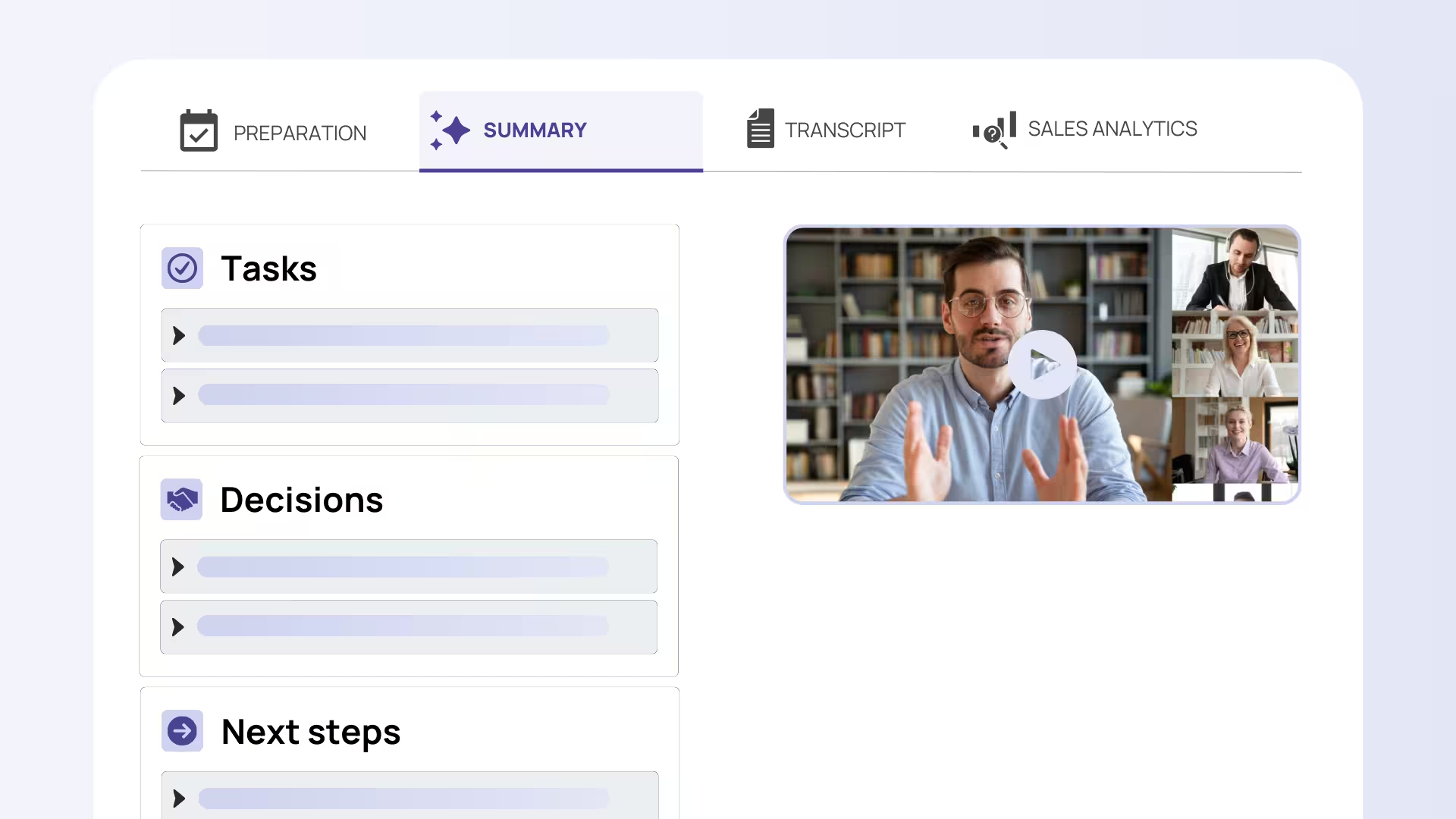
Sally is more than just a transcription tool, it’s a smart AI assistant designed specifically for the demands of modern digital collaboration. It not only transcribes meetings but also automatically joins scheduled calls on Zoom, Microsoft Teams, Google Meet and Webex, listens in real time, takes structured notes, highlights key discussion points, and generates action items and summaries. Sally seamlessly integrates with popular CRMs and project management platforms, helping teams stay organized and aligned without manual follow-up.
Pros of Sally AI:
- Automatically joins meetings on Zoom, Microsoft Teams, Google Meet and Webex
- Actionable summaries and task tracking
- Integrates with Trello, Asana, and HubSpot
- GDPR-compliant, hosted in Germany
Cons of Sally AI:
- Primarily optimized for meetings (but can transcribe audio/video files too)
Perfect for companies wanting hands-off automation, real-time collaboration support, and streamlined workflows.
Conclusion: Which Whisper Alternative is Right for You?
Choosing the right Whisper alternative ultimately comes down to your specific goals, technical requirements, and the environment in which you'll be using the tool. It depends on your priorities:
- Need full control and local processing? Try Whisper or Vosk
- Want scalable APIs for product integration? Google, Microsoft, or AssemblyAI
- Looking for a hands-free assistant for business meetings? Sally
- Need ultra-fast, real-time performance? Deepgram
Each tool comes with its own set of strengths, and depending on your goals, combining two or more solutions can sometimes yield the best results. Whether you're looking for offline reliability, enterprise integration, real-time performance, or AI-driven automation, there's a fitting option available. The good news: speech-to-text technology has never been more powerful, customizable, or accessible than it is today.
Pro Tip: Want to streamline your meetings and save hours each week? Try Sally for free for 4 weeks. Start your free trial now.


