

Meetings are everywhere: strategy meetings, team standups, recurring project syncs, sales calls. And yet many teams face the same problem: too many meetings, they run too long, and in the end it is unclear what actually came out of them. This is exactly where meeting analysis comes in. It helps you evaluate meetings not based on gut feeling, but by using data to understand what works and what does not.
Meeting analysis does not mean controlling people. It is about finally making one of the biggest time and cost drivers in a company manageable. If employees spend a large part of their week in meetings, even a small percentage of improvement quickly becomes noticeable. Less meeting time, clearer decisions, better collaboration. That is the goal.
What Is Meeting Analysis?
Meeting analysis is the systematic collection and evaluation of data around meetings, with the goal of continuously improving how meetings are run. You do not just look at “How long was the meeting?” or “How many people attended?”. You also analyze quality signals such as participation, agenda adherence, outputs, and, when useful, feedback on the overall atmosphere.
An important distinction: meeting analysis is more than simple calendar statistics. Modern meeting analytics combine meeting metadata (calendar, video tools) with content (transcripts, summaries) and outcomes (tasks, decisions, next steps). This creates a complete picture.
Why Meeting Analysis Is Worth It
Data-driven meetings pay off because you can focus on the right levers:
- Efficiency: Meetings become shorter or less frequent without losing essential alignment.
- Productivity: More clarity during meetings leads to faster decisions and better execution.
- Costs: Every minute saved multiplies by the number of participants and their hourly rates.
- Satisfaction: Less idle time and more purpose reduce meeting fatigue.
In short: meeting analysis turns meetings into a process you can improve, instead of a ritual that just happens.
What Does Meeting Analysis Include in Practice?
For meeting analysis to really help, you should understand the key areas. You do not need to cover everything at once, but you should know which levers exist.
Meeting Data from Calendar and Video Tools
This is where almost every setup starts, because the data is easy to access:
- Frequency: How many meetings take place per week or month?
- Duration: How long are meetings scheduled, and how long do they actually last?
- Number of participants: How large are meetings typically, and does that make sense?
- Attendance rate: Who often declines, who frequently does not attend?
- Punctuality: Start and end times as a basis for improving time discipline.
Even these basic metrics reveal patterns. Maybe Friday meetings are regularly poorly attended. Maybe certain recurring meetings run over time almost every session. These are clear starting points.
Communication Dynamics: Who Speaks, Who Gets Heard?
Meetings can technically “happen” and still perform poorly. Often the issue is the conversation dynamics:
- Speaking time: Do a few individuals dominate, or is discussion balanced?
- Speaker changes: Is there real exchange, or long monologues?
- Interruptions: Are people frequently interrupted, intentionally or not?
These signals are especially valuable for leadership, HR, and team culture. A meeting can be correct in content and still not be collaborative.
Content, Agenda Adherence, and Topics
A common reason for inefficient meetings is lack of structure. Content analysis helps make this visible:
- Which topics were actually discussed?
- How much time was spent on each agenda item?
- Are there items that regularly spiral out of control, such as “any other business”?
- Are topics repeatedly postponed because the agenda is overloaded?
This is where some of the fastest improvements happen: better agendas, clear time boxes, better preparation.
Engagement and Atmosphere: Numbers Plus Quick Feedback
Not everything that matters is purely quantitative. That is why many teams combine data with short feedback:
- A meeting score (for example, 1 to 5) right after the meeting
- A one-minute question: “Was this meeting useful?” plus free-text input
Some tools can also derive signals from language style, such as trends toward positive or negative tone. This can be helpful, but should never be evaluated without context.
Output and Quality of Results
In the end, what matters is whether meetings produce results. Typical output signals include:
- Decisions: Was something clearly decided?
- Action items: Are there tasks, owners, and deadlines?
- Next steps: Is it clear what happens next?
If you want, you can also work with a simple cost model: number of participants multiplied by duration and an assumed hourly rate. This is not a perfect “meeting ROI”, but it creates awareness.
How to Get Started with Meeting Analysis: A Pragmatic Process
Meeting analysis works best as a repeatable workflow. You do not need to start perfectly. You just need to start.
Define Meeting Types
Not every meeting has the same goal. A standup is meant to coordinate. A strategy meeting should drive decisions. A customer call should move a deal forward. Define three to six meeting types that are common in your organization.
Set Goals and a Small Number of KPIs
Choose two to five metrics per meeting type that truly match your goal. Examples:
- Standup: duration, punctuality, clear next steps
- Project meeting: decisions, action items, agenda adherence
- Sales call: next steps, objections addressed, topic clusters
Important: too many KPIs quickly lead to analysis paralysis.

Measure a Baseline
Collect data for two to six weeks without changing everything right away. This gives you a realistic picture. You will start to see patterns instead of overvaluing isolated cases.
Identify Patterns and Derive Actions
Look for outliers: meetings that regularly run over time, recurring series with no outcomes, sessions with low attendance. From this, derive one concrete action you can test.
Measure Again and Iterate
Set a fixed review cadence, for example once a month. Check whether your metrics are improving. If not, adjust your approach. Meeting analysis is a continuous process.
Best Practices for Better Meetings with Analytics
Before the Meeting: Purpose, Agenda, the Right Participants
A good meeting starts long before the actual calendar slot. If clarity is missing here, it is hard to fix later. Preparation, in particular, is a lever many teams underestimate.
In practice, this means:
- Clarify the purpose: What should be different after the meeting than before? A decision, an aligned plan, or clear next steps.
- Structure the agenda: Send an agenda in advance with time slots and clearly mark decision points so everyone knows what matters.
- Select participants deliberately: Invite only people who truly need to contribute or decide. Everything else unnecessarily inflates meetings.
- Use past meetings: Look at previous sessions. Which topics always took too much time? Where did confusion regularly arise? That is exactly where better preparation pays off.
During the Meeting: Maintain Focus and Participation
Execution determines whether a meeting stays focused or slowly drifts apart. This is less about theory and more about simple rules that work in the moment.
The following measures are especially helpful:
- Manage time consciously: Use timeboxing, timers, or a clearly assigned timekeeper so topics do not quietly spiral out of control.
- Actively encourage participation: Intentionally involve quieter participants, for example with round-robin formats or quick opinion rounds, instead of waiting only for volunteers.
- Park side topics cleanly: Capture digressions in a “parking lot” so they are not lost, but also do not destroy the current focus.
- Make progress visible: Document interim results openly, for example on a whiteboard or in a shared document, so everyone sees what is already clarified and what is still open.
After the Meeting: Results, Follow-Up, and Learning
After the meeting is where it becomes clear whether good conversations turn into real outcomes. This is exactly where many teams lose surprising amounts of value.
The following approach has proven effective:
- Capture results immediately: Document decisions and tasks promptly while everything is still fresh. Ideally with owners and clear deadlines.
- Collect quick feedback: If it fits the meeting type, a simple question like “Was this meeting helpful?” or a short score is often enough.
- Check execution: Regularly review whether tasks are completed and decisions implemented. Otherwise meetings remain without impact.
- Make knowledge usable: Collect notes, decisions, and learnings centrally, for example in a searchable meeting library, so insights are not lost.
Common Mistakes and How to Avoid Them
A Sense of Control Within the Team
If people feel they are being evaluated, resistance emerges. Communicate clearly: this is about meeting quality, not individual performance. Work with team-level KPIs and discuss improvements together.
Underestimating Data Protection
Recordings and transcripts require clear rules. If a meeting is recorded “just like that” and the team only notices later, trust erodes quickly. Communicate openly when and why recordings are made, obtain consent, and define access rights and retention periods. Use compliant solutions and summarize the key rules briefly in a meeting policy. This builds trust.
Too Much Data, Too Little Focus
If you try to measure everything, you end up changing nothing. Tracking 25 metrics is useless if no one knows what to do differently tomorrow. Choose a small set of clear KPIs and ask yourself for each number: What concrete action follows from this? And what value does this metric bring?
A One-Time Report Instead of a Process
Meeting analysis only has an effect if it happens regularly. Define ownership and schedule reviews as fixed appointments, for example every first Monday of the month with 15 minutes in the team meeting. Otherwise the impact fades in day-to-day work and old patterns quickly return, even though you already knew what needed to change.
Numbers Without Context
A brainstorming session may produce few decisions and still be valuable because it generates ideas and direction. Always evaluate meetings in the context of their purpose. A standup needs clear next steps, a workshop needs room for thinking. Combine quantitative data with short qualitative feedback, for example a quick “Did this help you?” plus one sentence on what was missing.
Modern Tools: Meeting Analysis Without Excel Overhead
Today, you no longer have to do meeting analysis manually. Modern tools can automatically collect and evaluate data, often directly from calendars, video tools, and transcripts.
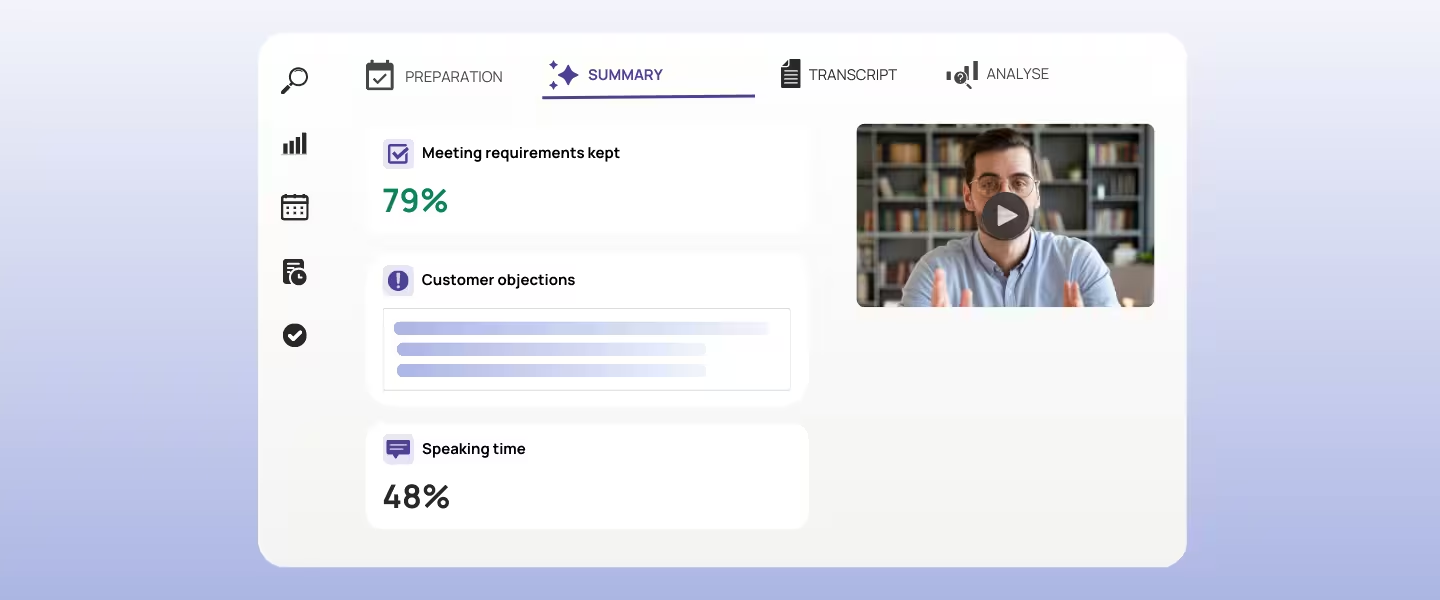
One example is Sally AI. As an AI meeting assistant, Sally can automatically transcribe meetings, create structured summaries, and derive outcomes such as tasks, owners, deadlines, and decisions. Additional analyses can cover communication dynamics, for example speaking time per person or topic clusters from the conversation.
The main advantage is automation. Instead of someone taking notes and later compiling data, minutes, action items, and analysis run quietly in the background. This makes getting started much easier for teams, especially when there is no time for manual evaluation.
What remains essential: a tool is an enabler. It provides data and structure, but you still need to derive actions from it and actually implement them.
The Future: Where Meeting Analytics Is Headed
Meeting analytics is evolving rapidly. Three trends are especially relevant:
- Real-time coaching: Guidance during the meeting itself, for example on timing or participation.
- Stronger integration with workflows: Tasks and decisions flow automatically into project management or CRM systems.
- Greater focus on “soft” signals: Engagement, inclusivity, and tone become more measurable, but only valuable if handled ethically and transparently.
Conclusion: Meeting Analysis Makes Meetings Manageable
Meetings are too important to leave to chance. Meeting analysis gives you an objective view of what really happens in meetings: how much time goes in, how strong participation is, how consistently structure is followed, and what results are produced.
If you start pragmatically, choose a small set of meaningful KPIs, and regularly adjust your approach, you can reduce meeting time while achieving better outcomes. Tools like Sally AI help by automatically capturing data and outcomes. But the decisive factor is always the same: insights must lead to action.
If you apply this consistently, meetings become what they are meant to be: a tool that accelerates collaboration instead of slowing it down.


