

Local government is one of the most demanding — and most underserved — environments for digital transformation. Public administrators and municipal staff operate at the intersection of legal accountability, citizen expectations, interdepartmental complexity, and chronic resource constraints. While private-sector organizations have rapidly adopted AI-powered workflows to boost productivity, municipalities often lag behind, not for lack of ambition, but because the stakes of getting it wrong are higher and the workflows are uniquely complex.
At our platform, we work with public-sector clients across dozens of municipalities, and the pattern of pain is strikingly consistent. Committees generate decisions that never become documented action items. Residents wait on hold or abandon service requests. Permitting queues stretch for months. Budget cycles are run on spreadsheets that would make a CFO nervous. And underneath it all, institutional knowledge walks out the door whenever a long-serving staff member retires or a department reorganizes. These are not minor inefficiencies — in local government, they translate directly into delayed infrastructure projects, frustrated constituents, and audit risks.
The good news is that a new generation of AI tools has been purpose-built for exactly these challenges. Below, we walk through the most impactful solutions available today — what problem each one solves, how it solves it, and what a real municipal workflow looks like when it's in place.
Sally AI: Closing the Knowledge Gap in Committee Meetings and Cross-Department Coordination
One of the most persistent governance challenges in municipal administration is what professionals in the field call "knowledge loss" — the institutional memory that evaporates when meeting decisions are not captured with fidelity, when council committee outcomes get buried in manually transcribed minutes, or when a key coordinator leaves and takes undocumented context with them. In a procurement meeting with external vendors, or an emergency coordination call between departments, the cost of a missing action item is not just operational — it can have legal and reputational consequences.
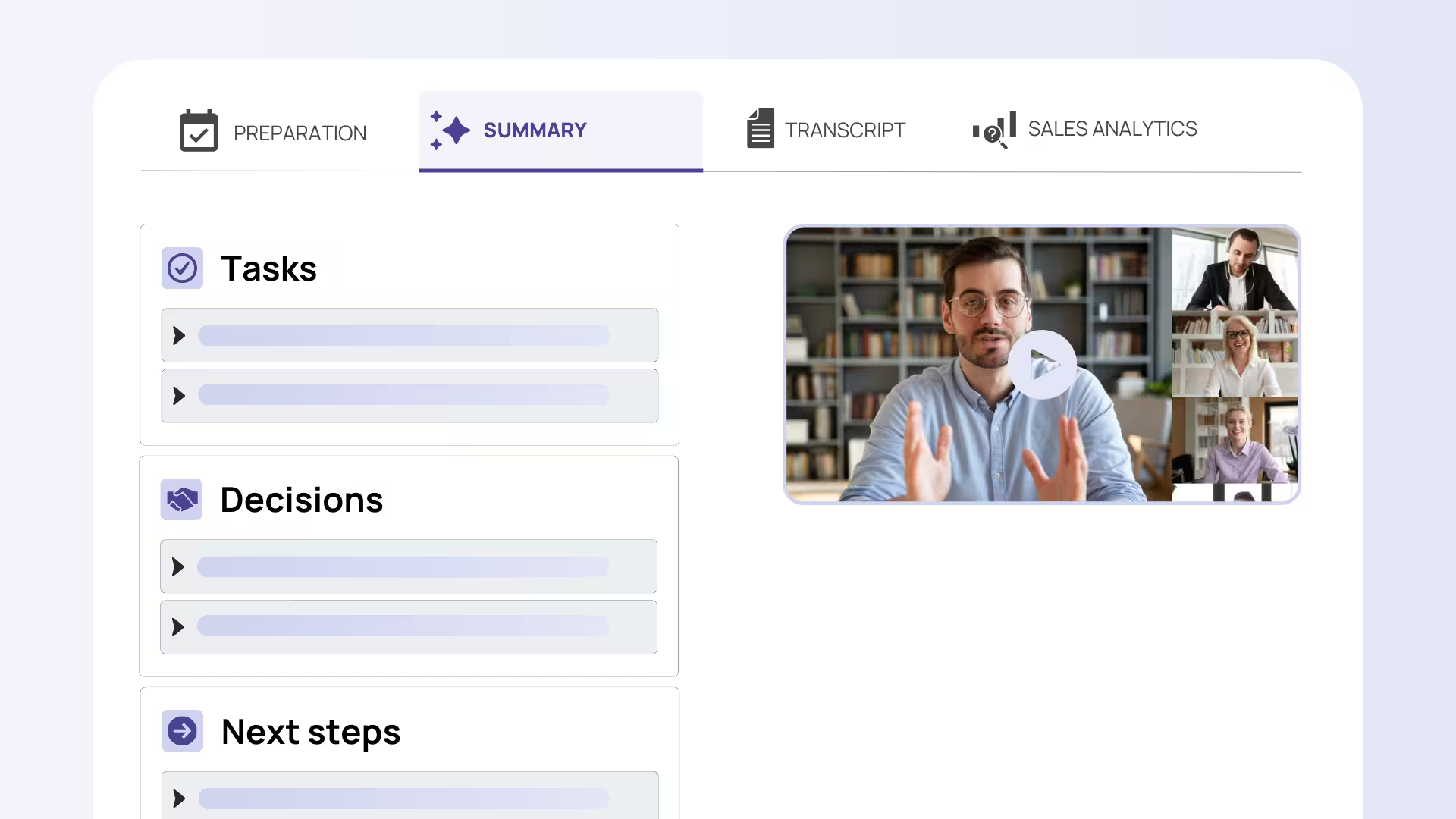
Sally AI addresses this directly by providing AI-generated meeting summaries, structured action item lists, and searchable records for internal and cross-departmental meetings. Imagine a city planning department that holds weekly coordination calls involving the building authority, the roads department, and an external civil engineering firm. Without a structured record, each stakeholder leaves with a different interpretation of what was agreed. With Sally AI integrated into those calls, the meeting produces an immediate, structured output: decisions made, owners assigned, deadlines confirmed. When staff rotate — as they inevitably do in public service — the incoming coordinator can review months of meeting history in minutes rather than chasing colleagues for context. For municipalities focused on continuity of governance, this is not a productivity tool. It is a risk management tool.
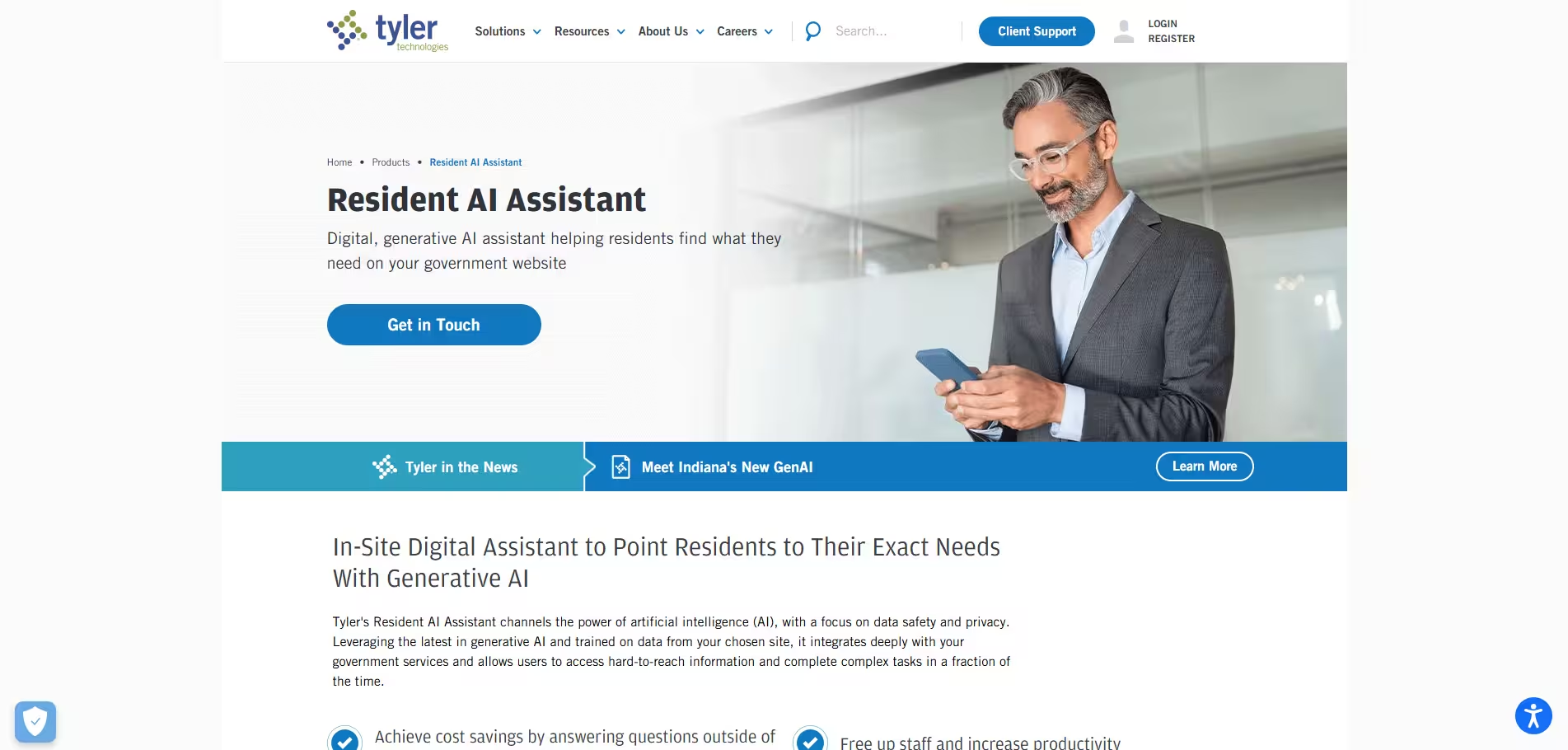
Tyler Technologies Resident AI Assistant: Modernizing Citizen Engagement at Scale
Municipal service desks are under pressure from every direction. Residents expect 24/7 availability — a standard set by private-sector digital services — while staffing budgets remain flat and the volume of service requests continues to grow. Common inquiries about bin collection schedules, permit application status, local zoning regulations, or payment deadlines consume enormous front-office capacity, leaving staff with less time for complex casework that genuinely requires human judgment.
Tyler Technologies' Resident AI Assistant introduces natural-language, round-the-clock guidance that allows residents to navigate government services conversationally, without waiting for office hours. A resident trying to understand what documentation is required for a home renovation permit can ask a plain-language question and receive a structured, accurate answer immediately — at 9 PM on a Sunday. The system draws on the municipality's own knowledge base and service directory, ensuring responses are locally relevant rather than generic. For municipal digital transformation officers, the measurable outcome is a meaningful reduction in inbound call volume and a measurable improvement in resident satisfaction scores — two KPIs that increasingly matter for local government performance reviews and public trust.
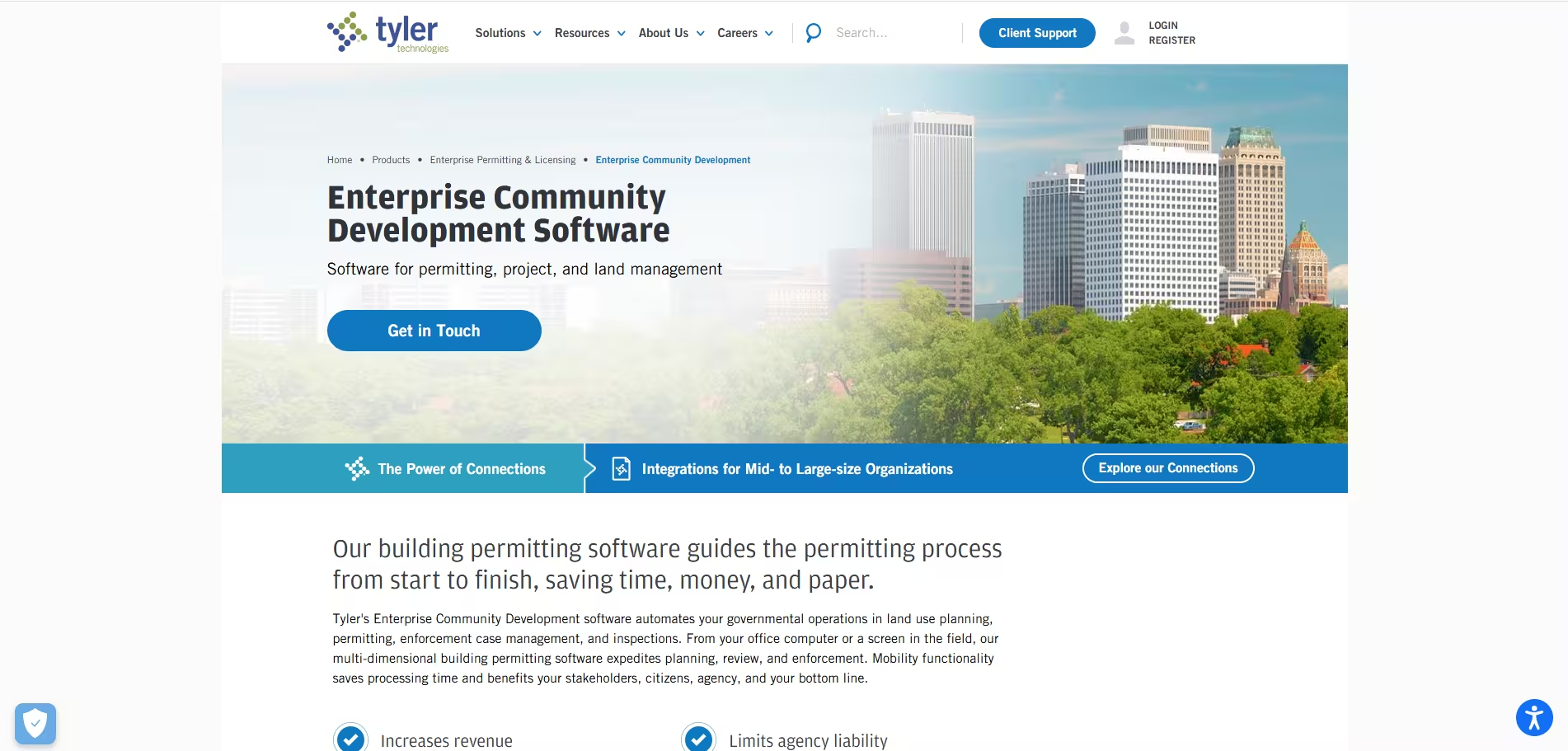
Tyler Enterprise Community Development: AI-Driven Permitting and Planning Workflows
Building permitting is one of the highest-volume, highest-friction workloads in local government. A mid-sized city might process thousands of permit applications annually across residential construction, commercial development, infrastructure works, and enforcement cases. Each application touches multiple departments — planning, inspections, legal, finance — and manual coordination across those touchpoints creates bottlenecks that delay construction timelines, frustrate developers and homeowners alike, and expose municipalities to procedural risk.
Tyler's enterprise community development platform applies AI automation across the permitting lifecycle: intake, routing, inspection scheduling, compliance checking, and enforcement case management. Consider a scenario where a developer submits a complex mixed-use development application. Instead of the application sitting in a queue while a coordinator manually identifies which departments need to review it and in what sequence, the platform routes it automatically based on application type, flags potential zoning conflicts, and surfaces the relevant regulatory requirements for the reviewing officer. Inspectors receive AI-assisted scheduling based on project phase and resource availability. The result is a permitting process that moves faster, produces an auditable workflow record, and scales without proportional staff increases — a critical consideration for growing municipalities operating under fiscal constraints.
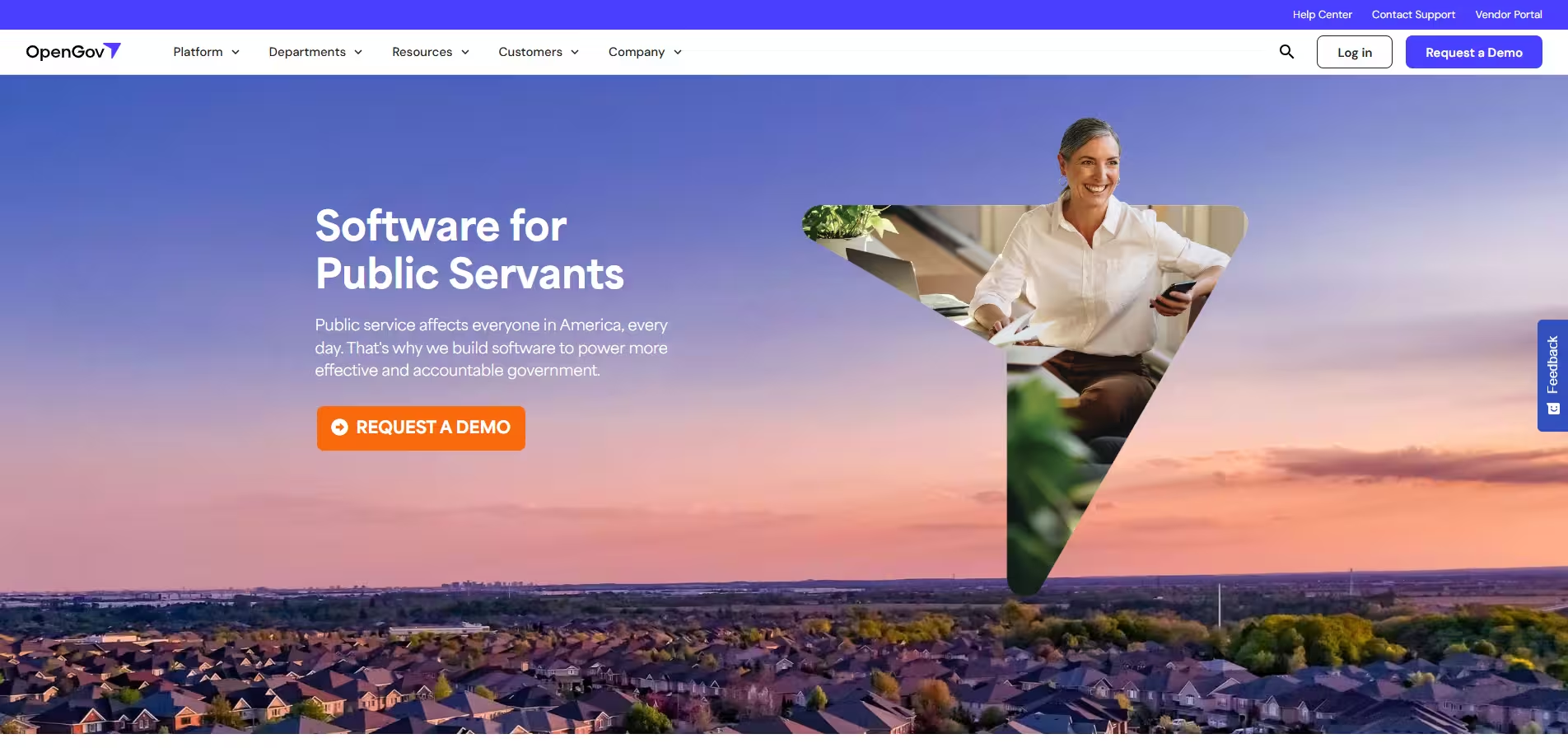
OpenGov: AI-Powered Financial Planning for the Modern Budget Cycle
Budget planning in local government remains one of the most spreadsheet-dependent, time-consuming processes in public administration. Finance teams spend weeks consolidating data from disparate departmental sources, building multi-year projections manually, and producing reports that are often outdated by the time they are presented. Anomaly detection — spotting unusual spending trends or revenue shortfalls before they become crises — relies on analyst attention that is already stretched thin.
OpenGov brings AI-powered forecasting to the municipal budget cycle, enabling finance departments to generate multi-year projections automatically, model different fiscal scenarios, and detect anomalies in revenue and spending trends as they emerge rather than in retrospect. A practical example: a city finance officer managing a portfolio of public infrastructure grants and general fund allocations can run scenario analyses — "What does our capital budget look like if property tax revenues underperform by 8%?" — in minutes rather than days. When OpenGov flags an unexpected spike in a departmental cost center mid-year, the finance team can investigate and course-correct within the fiscal year rather than discovering the issue at year-end close. For CFOs and budget directors in municipal government, this is the difference between reactive and proactive fiscal governance.
Esri GeoAI and Imagery AI: Spatial Intelligence for Infrastructure and Land-Use Planning
Municipal asset management and land-use planning depend on accurate, up-to-date spatial data — and keeping that data current is a resource-intensive challenge. Manually surveying building footprints, monitoring land-use changes, or tracking infrastructure condition across a city's entire geography is simply not feasible at the frequency modern planning requires. This is where geospatial AI delivers value that has no manual equivalent.
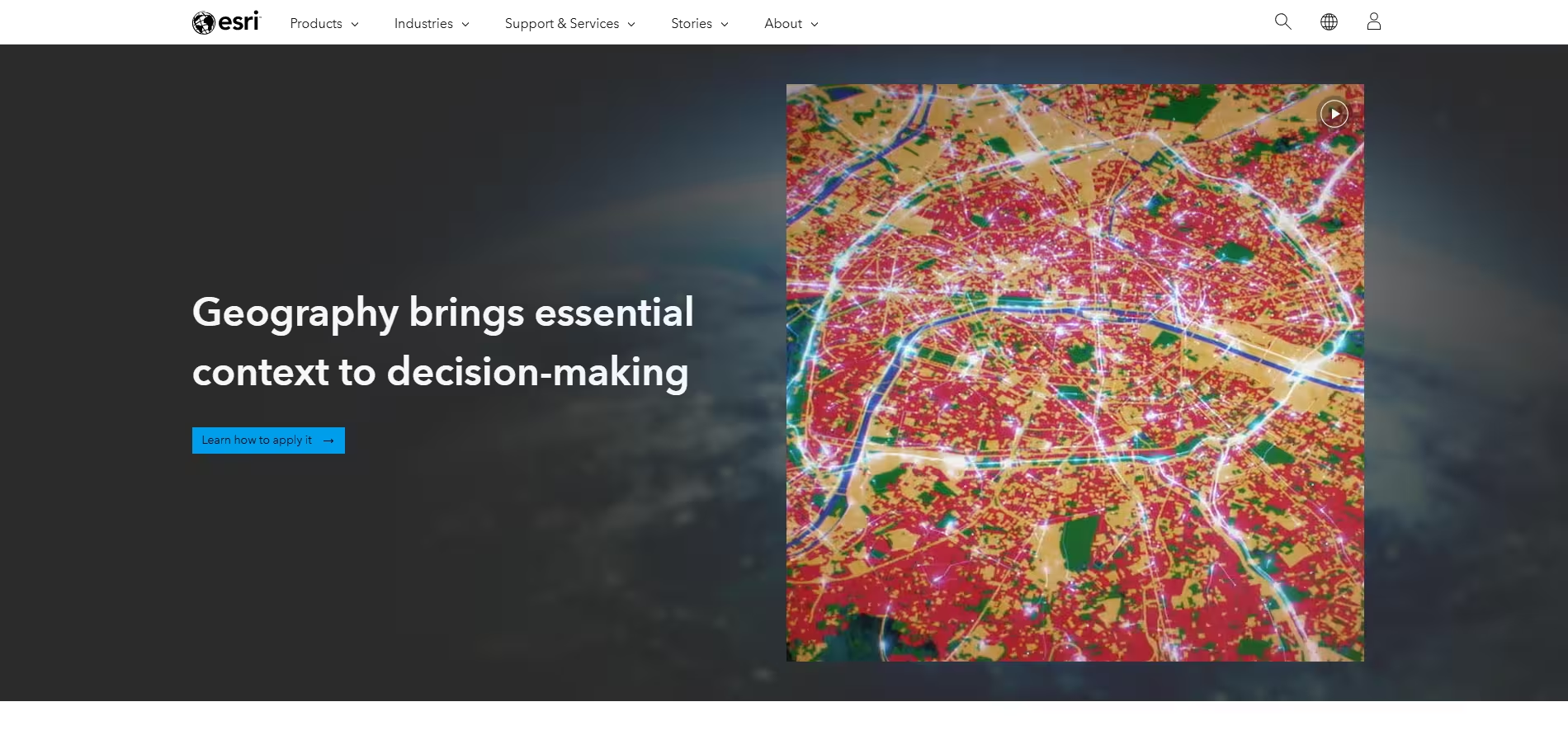
Esri's GeoAI and imagery AI toolsets apply deep learning workflows to satellite and aerial imagery to automatically detect and classify objects — building footprints, vegetation encroachment, road surface conditions, stormwater infrastructure changes — at a scale and speed that transforms what is operationally possible. A municipality planning a comprehensive property revaluation, for example, can use Esri's imagery AI to identify structures that have been extended or modified since the last assessment cycle, flagging them for review without manual cross-referencing of aerial photographs. For urban planners, GIS analysts, and infrastructure managers, this capability converts what was previously a multi-year manual audit into a regularly updated, AI-maintained spatial intelligence layer that feeds directly into planning, compliance, and capital investment decisions.
Google AI for Public Sector: A Foundation for Custom Municipal AI Services
Not every municipal workflow maps neatly onto an off-the-shelf product. Municipalities often have niche operational processes — legacy system integrations, jurisdiction-specific regulatory workflows, or cross-agency data-sharing requirements — that require a build-your-own approach rather than a configure-and-deploy one. For municipalities with the technical capacity to develop bespoke AI services, the Google Cloud public-sector stack provides an enterprise-grade foundation.
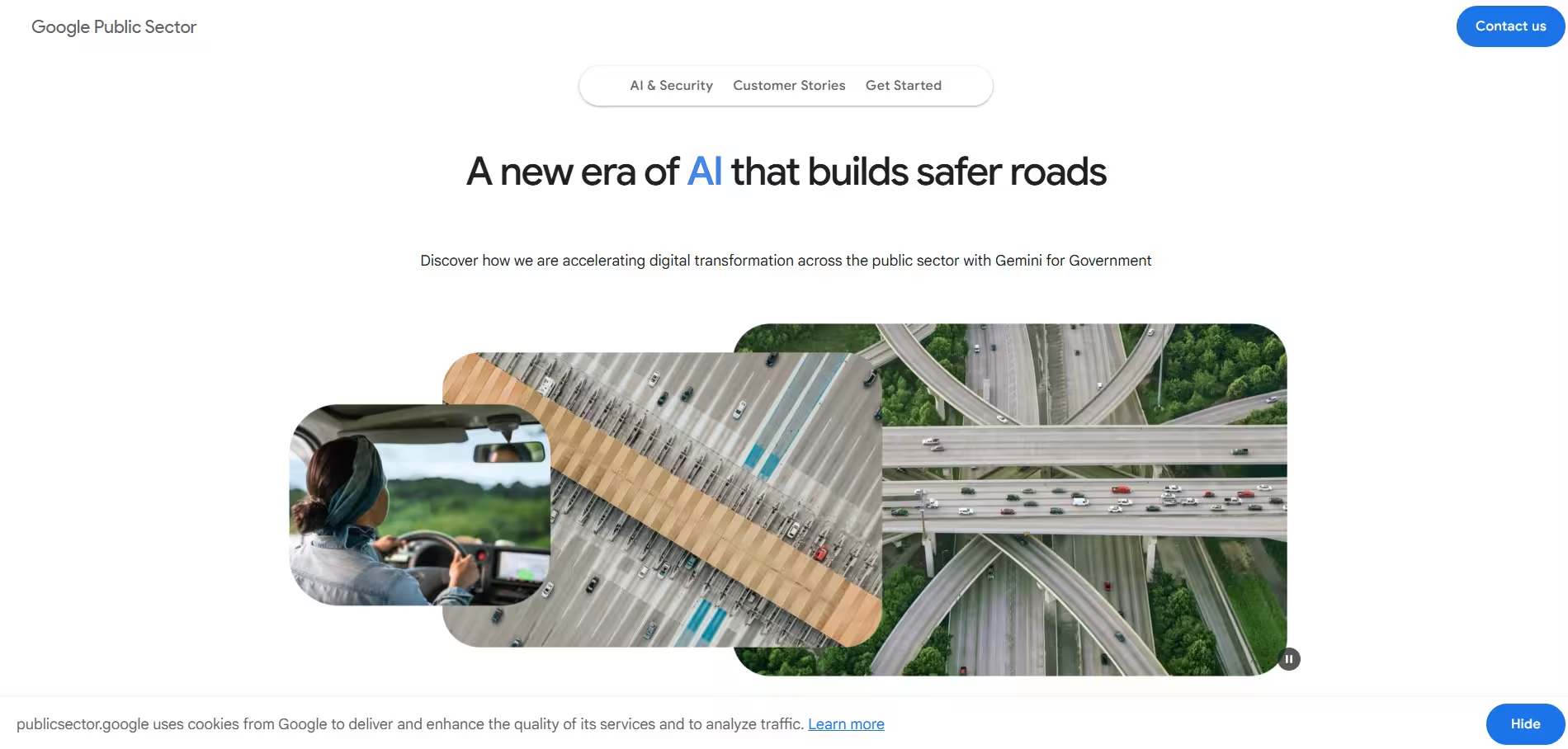
Gemini for Government and Vertex AI are positioned as the building blocks for AI agents and integrated state and local government solutions within Google Cloud's security and compliance framework. A municipality's IT department might use Vertex AI to build a custom document classification agent that routes incoming correspondence — planning objections, FOIA requests, supplier invoices — to the correct department and workflow queue automatically. Or a regional government might develop a Gemini-powered internal knowledge assistant that allows staff to query policy documents, legislative records, and procedural guides in natural language. The flexibility of the stack means that municipalities do not need to compromise on their specific requirements — and because the infrastructure is cloud-native, it scales with demand and meets the data sovereignty requirements that public-sector organizations must increasingly satisfy.
The Recommended Municipal AI Tool Stack: Building an Integrated System
Individual tools solve individual problems. But the municipalities seeing the greatest productivity and governance gains are those that approach AI adoption as a connected ecosystem rather than a collection of point solutions. Based on our experience working with public-sector clients, here is how a coherent municipal AI stack fits together.
Core Layer: Productivity and Institutional Memory
Sally AI sits at the foundation of internal operations, ensuring that every significant meeting — from council committee sessions to vendor negotiations to emergency coordination calls — produces a structured, searchable record. This is the connective tissue that prevents knowledge loss across departments and staff transitions.
Citizen-Facing Layer: Digital Service Delivery
Tyler Technologies' Resident AI Assistant handles the inbound citizen engagement layer, deflecting high-volume, routine inquiries from front-office staff and routing complex cases to the appropriate human team. Alongside this, Tyler's enterprise community development platform manages the permitting and planning workflow that sits at the intersection of citizen demand and municipal operations, automating case management from application intake through inspection and closure.
Financial Intelligence Layer
OpenGov handles the financial planning and budget management layer, giving finance teams AI-assisted forecasting, scenario modeling, and anomaly detection. To integrate OpenGov effectively with the rest of the stack, finance data outputs should connect with the municipality's ERP system — Tyler's own financial management modules or third-party ERPs such as SAP Public Services or Oracle Government — so that budget projections and actuals remain synchronized across platforms.
Spatial Intelligence Layer
Esri GeoAI extends the stack into the geospatial domain, providing the imagery analysis and asset inventory capabilities that feed land-use planning, infrastructure management, and capital investment decisions. Esri integrates naturally with many permitting and community development platforms, meaning spatial data generated by GeoAI can inform and enrich Tyler's permitting workflows — for example, automatically flagging permit applications in areas identified as flood risk or heritage protection zones.
Infrastructure and Custom Development Layer
Google Cloud's public-sector AI stack provides the foundation for any bespoke AI services the municipality needs to build — custom agents, document processing pipelines, inter-agency data integrations — with the security posture and compliance controls that government IT requirements demand.
Integration and CRM Considerations
Connecting these layers requires a thoughtful approach to middleware and data governance. Municipalities should evaluate a citizen relationship management platform — Salesforce Government Cloud and Microsoft Dynamics 365 for Government are the most widely adopted in the sector — to provide a unified view of citizen interactions across service channels. API integration layers such as MuleSoft or Azure Integration Services can connect the various platforms at the data level, ensuring that a citizen interaction captured in Tyler's Resident AI Assistant, a permitting case in community development, and a budget allocation in OpenGov all surface in a coherent operational picture for municipal leadership.
The stack described here is not a theoretical construct. It reflects the configuration we see working in practice for municipalities that are serious about AI-driven modernization — and it is designed to grow incrementally, so local governments can start with the layer that addresses their most acute pain point and build outward from there.


