

Insolvency administration is one of the most document-intensive, legally sensitive, and deadline-driven professions in the legal and financial industry. While other industries have embraced automation and AI-assisted workflows, many insolvency practices still rely heavily on manual processes – at exactly the point where the cost of missing context or mismanaging communications is highest. At our company, we work with legal and financial professionals across the full spectrum of case complexity, and insolvency administrators consistently rank among the professionals who benefit most dramatically from targeted AI integration.
The core tension in insolvency work is that every case involves a large document surface area – contracts, filings, creditor correspondence, debtor interviews, asset schedules – while the team handling it rarely scales proportionally with caseload. Deadlines tied to court proceedings and creditor committees are fixed and unforgiving. Stakeholder communications must be captured and defensible. And above all, the outputs of the work inform legally binding decisions where "we thought we noted that down" is not an acceptable answer.
The pain points are well-known across the profession. Documentation pressure is constant: case decisions, creditor communications, and internal coordination all need to be reliably captured to avoid disputes and rework down the line. Meeting knowledge loss is a specific, underestimated risk – calls with creditors, debtors, and potential buyers are rich with commitments and nuances that disappear without structured logging. Follow-up on action items spans multiple parties, from document requests and court submission checkpoints to timeline confirmations across legal counsel, courts, and buyers. The sheer volume of contracts, communications, and filings creates a review load that simply doesn't scale with headcount. And because the outputs often feed directly into legal records, verifiability and defensibility are not optional extras – they are baseline requirements.
In this article, we walk through six AI tools that address these pain points directly, followed by a recommended tool stack for insolvency practices looking to build a coherent and scalable AI infrastructure.
The Best AI Tools for Insolvency Administrators
Sally AI – Turning Creditor Calls Into Structured Case Records
One of the most persistent and least-discussed inefficiencies in insolvency work is what happens after a meeting ends. Calls with creditor committees, debtor interviews, and internal case syncs are high-value touchpoints, but the quality of what gets captured depends entirely on who was in the room and how carefully they were listening. When a case runs over eighteen months and involves rotating team members, this is not a minor administrative gap – it is a genuine handoff risk.
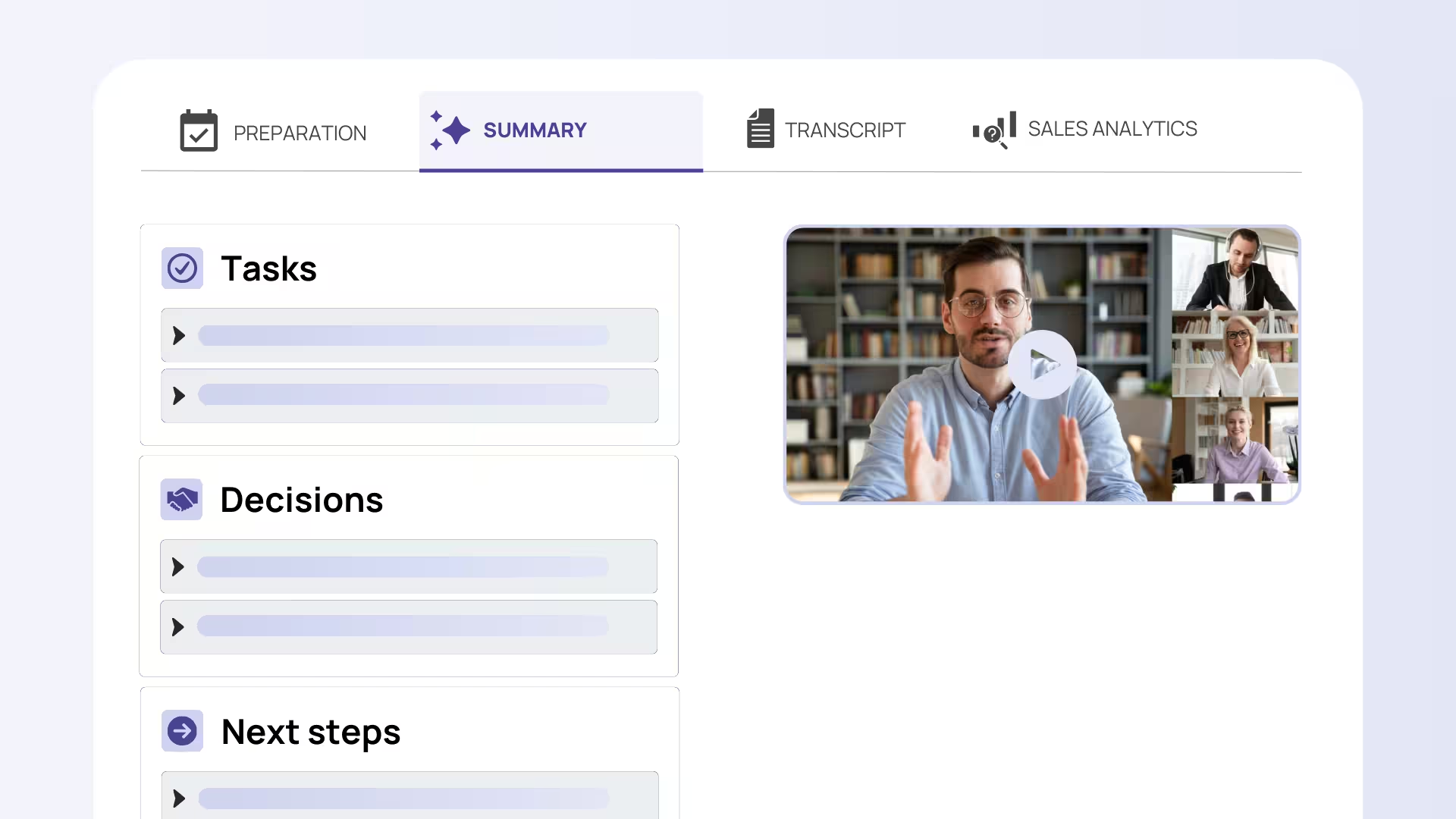
Sally AI addresses this directly by generating structured meeting summaries and recognising action items automatically. Rather than relying on one person's notes, the tool creates a shared record that can be referenced, assigned, and tracked across the team. Consider a practical scenario: a creditor committee call yields four distinct action items – a document request to the debtor's legal counsel, a deadline checkpoint for the asset valuation report, a follow-up on a disputed claim, and an internal task to update the distribution model. Without structured logging, these items scatter across personal inboxes and memory. With Sally AI, they are captured, attributed, and surfaced in one place. For long-running cases with high stakeholder complexity, this is not a convenience feature – it is a risk management tool.
Stretto Conductor – Managing High-Volume Stakeholder Communication at Scale
In corporate insolvency cases, stakeholder communication is not just frequent – it is structurally complex. Creditors span jurisdictions, legal representatives, and communication preferences. Status updates, claim acknowledgements, and procedural notifications all need to go out accurately and on time. Managing this manually in a high-volume case creates bottlenecks and introduces the risk of inconsistent messaging, which can have downstream consequences in disputes or creditor challenges.
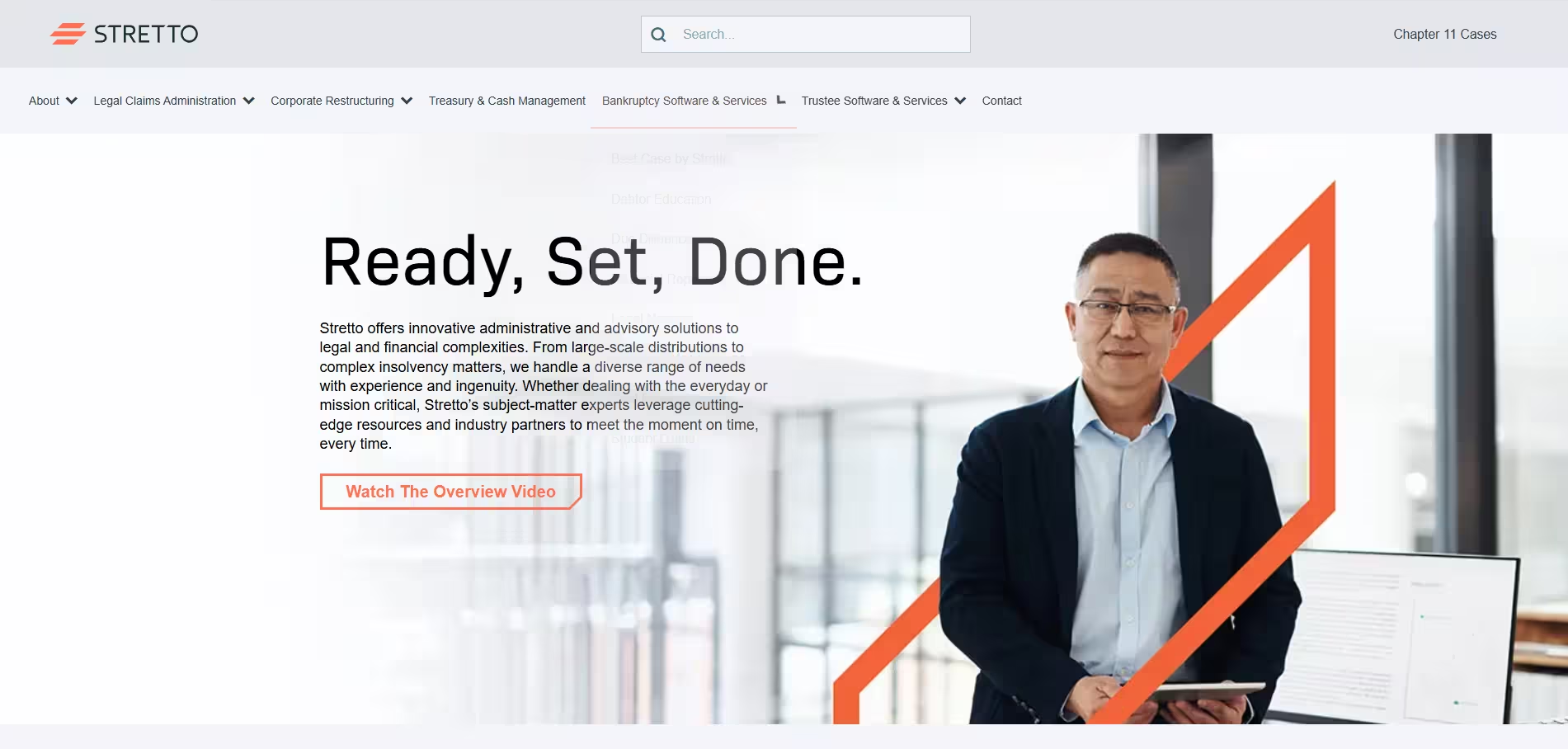
Stretto Conductor is an AI-powered platform designed specifically for the communication and research workflows of complex bankruptcy cases. It reduces the manual overhead of coordinating large creditor populations by structuring outbound communication workflows and supporting rapid information retrieval across case data. Imagine a case with over three hundred creditor parties, each at a different stage of the claims process: Stretto's infrastructure allows the case team to manage communication workflows without scaling headcount proportionally. For administrators who have grown accustomed to tracking stakeholder communication in spreadsheets and shared inboxes, the operational uplift is significant.
Relativity aiR – Defensible Document Review at Scale
The document review problem in insolvency is straightforward to describe and exhausting to solve manually: contracts, correspondence, internal communications, and regulatory filings accumulate quickly, and every document in the dataset has the potential to be legally relevant. Prioritising which documents need human review, which can be processed at speed, and which contain privilege or privacy considerations is a task that traditionally requires large teams and extended timelines.
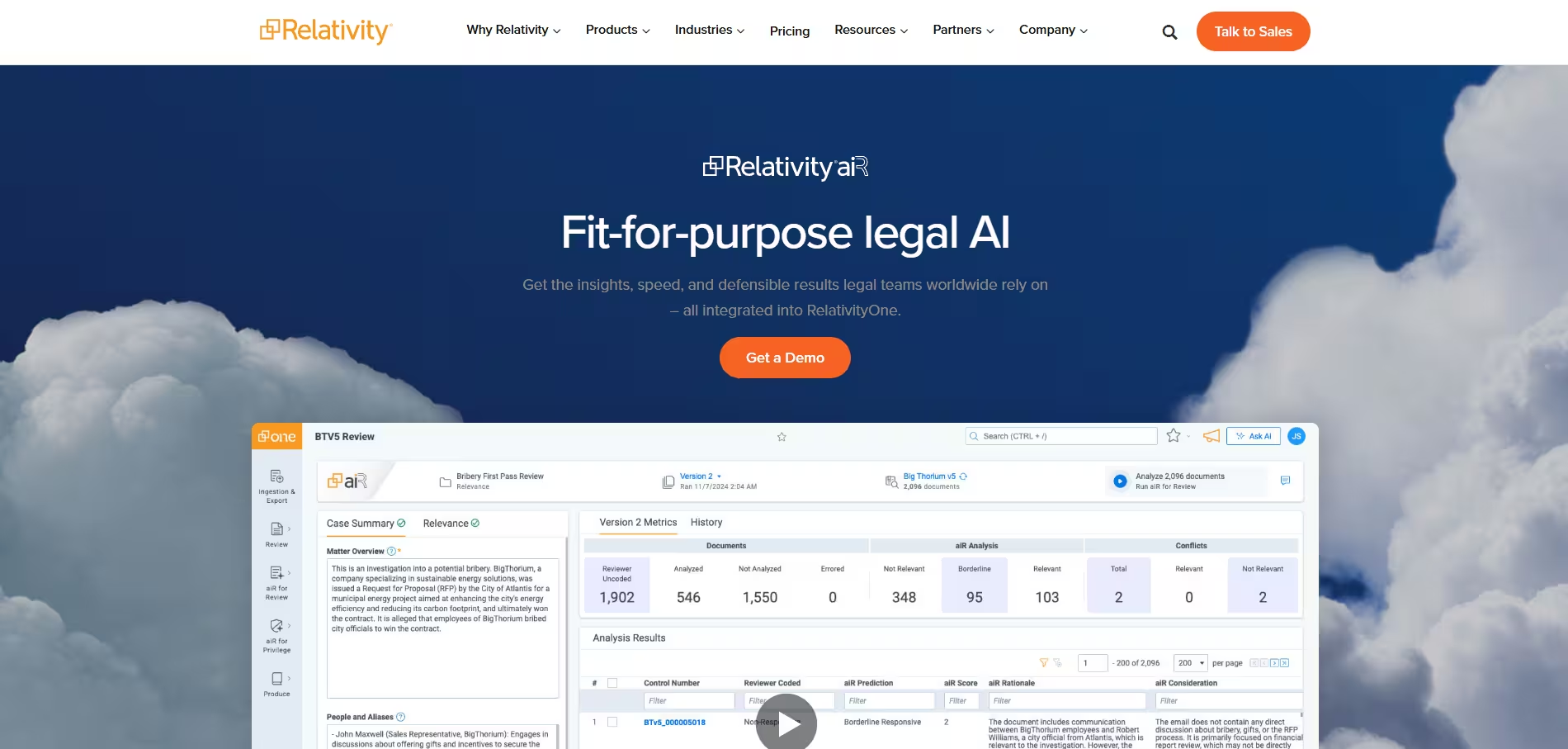
Relativity aiR brings AI-assisted document review into an auditable, defensible workflow. Its capabilities cover faster document triage, privilege and privacy identification, and generative review workflows that maintain the reviewability required when outputs inform legal filings or creditor notices. The critical differentiator here is defensibility: unlike generic AI tools that summarise or classify documents without audit trails, Relativity aiR is designed for legal-grade scrutiny. In practice, this means an administrator reviewing a dataset of several thousand emails and contracts in connection with a disputed asset sale can use aiR to flag relevant threads, identify privilege risks, and produce a review record that holds up under challenge. For insolvency administrators who regularly face asset-tracing scenarios or fraud-adjacent cases, this capability is especially valuable.
Litera Kira – Contract Intelligence for Asset Sales and Obligation Extraction
Asset sales are a pivotal phase in many insolvency proceedings, and the commercial risk concentrated in lease agreements, supplier contracts, and transactional documents is often underestimated until it surfaces at exactly the wrong moment. Manually reviewing dozens or hundreds of contracts to identify change-of-control clauses, termination triggers, assignment restrictions, and outstanding obligations is slow, expensive, and dependent on reviewer consistency.
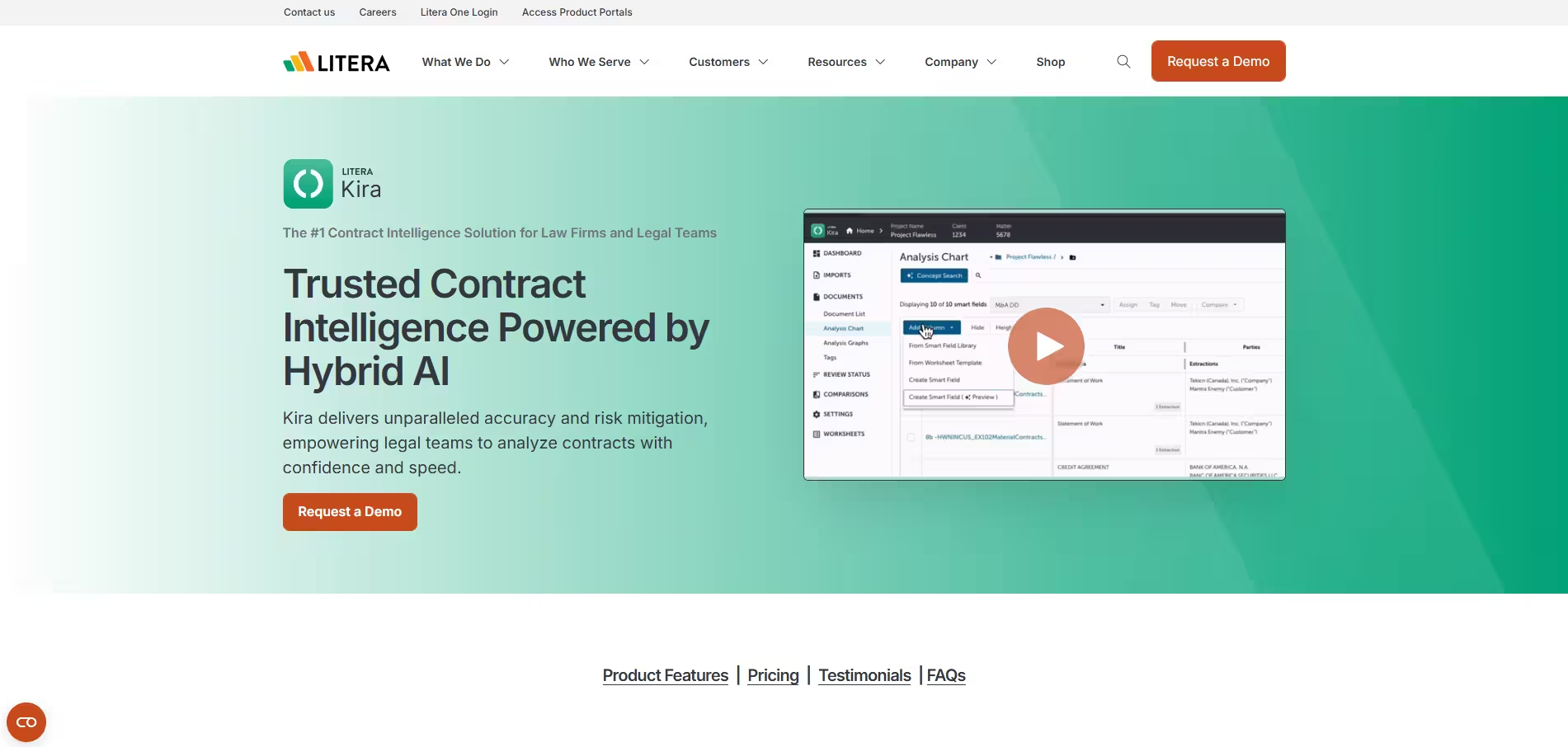
Litera Kira applies hybrid AI to extract specific clauses and data points from contracts at scale, making it possible to conduct red-flag reviews across a large contract population in a fraction of the time required manually. For an insolvency administrator preparing a business for sale, Kira can process the target's lease portfolio to surface assignment restrictions and landlord consent requirements before they become deal blockers. The output is a structured dataset of flagged provisions, rather than a stack of marked-up PDFs, which accelerates the due diligence process and reduces the risk of missed obligations. In proceedings where asset sale timelines are court-driven and non-negotiable, this kind of velocity matters directly to case outcomes.
BRYTER – Standardising Repeatable Legal Workflows and Claims Handling
A substantial portion of the administrative burden in insolvency work is not legally complex – it is repetitive. Intake forms, claims calculations, approval workflows, and standardised creditor responses are tasks that consume significant time and introduce inconsistency when handled ad hoc across a team. This administrative overhead competes directly with the substantive legal and commercial work that drives case value.
BRYTER enables insolvency teams to build rule-based and AI-assisted workflows for legal intake, triage, red-flag review, and mass claims handling patterns. The value is in operationalising repeatable processes – creating guided workflows that ensure consistency, reduce the risk of human error, and free senior team members for higher-value work. A practical example: rather than each junior team member calculating and formatting creditor distribution notices from scratch, a BRYTER workflow guides the process, applies the correct legal parameters, flags exceptions for review, and produces a consistent output ready for sign-off. Over a full caseload, the compounding time savings and quality improvements are material.
Luminance – Investigation Support for Complex, Data-Intensive Cases
Not all insolvency proceedings are straightforward wind-downs. Cases involving allegations of fraudulent trading, asset concealment, or complex multi-entity structures require a different kind of document analysis: one that can identify patterns, surface anomalies, and handle large unstructured datasets without losing consistency across the review. This is precisely where generic document tools reach their limits.
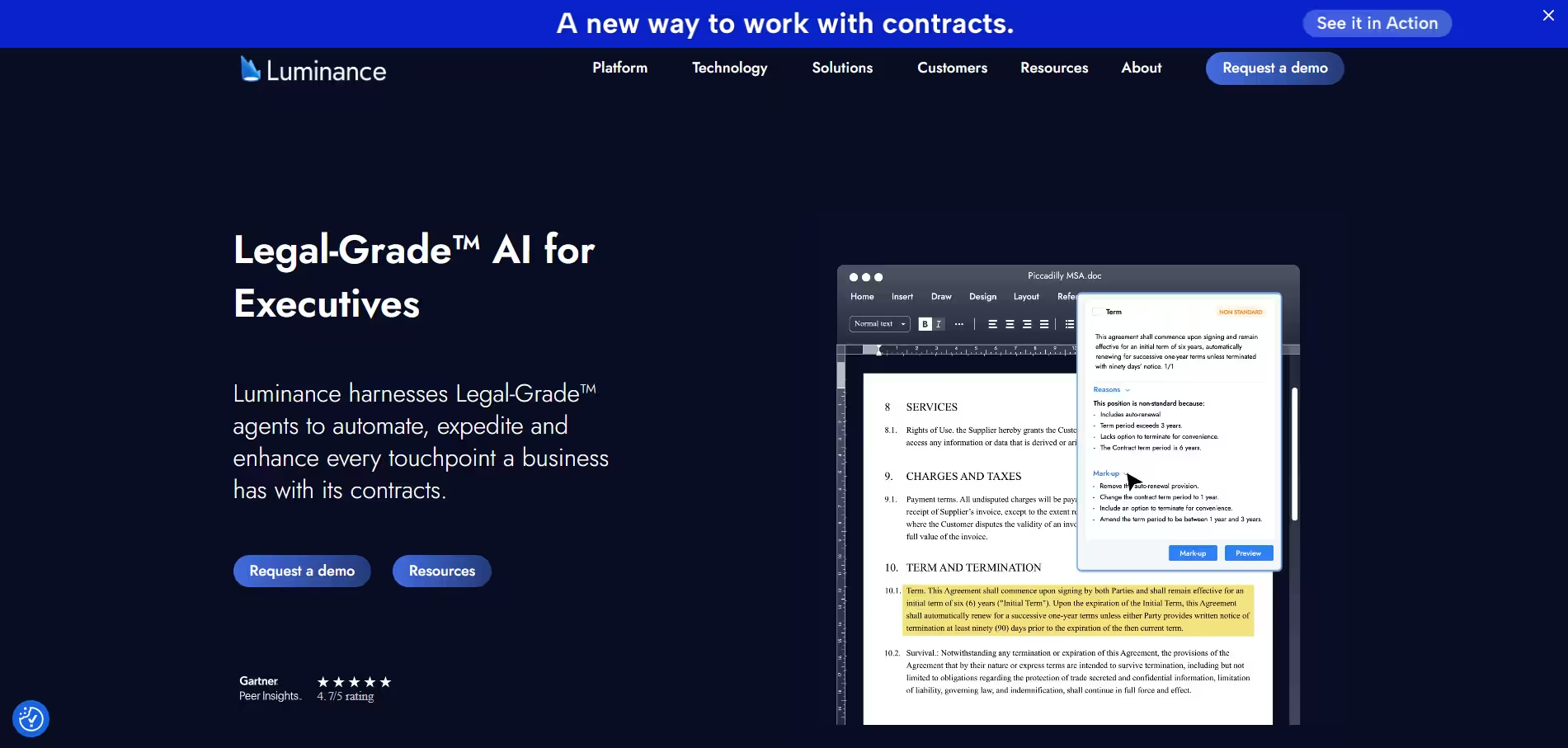
Luminance is a legal AI platform built for investigation-grade document analysis, with a particular emphasis on consistency and defensibility across large datasets. It can process unstructured correspondence, internal communications, and financial records to surface investigative leads – connections, anomalies, and patterns that might not surface in a linear manual review. For an insolvency administrator investigating the conduct of a director in a trading-while-insolvent case, Luminance can process years of email correspondence and financial communications to identify patterns relevant to the investigation, making the analysis both faster and more comprehensive. Its emphasis on auditability means the investigation trail is documented in a way that supports legal proceedings if required.
Recommended AI Tool Stack for Insolvency Administrators
The tools above are individually valuable, but insolvency practices that want to build a coherent AI infrastructure need to think about how they connect, and what sits around them. Based on our experience working with legal and financial professionals at scale, here is a recommended tool stack that covers the full operational arc of an insolvency case.
The Core Stack
For meeting capture and task management, Sally AI handles structured logging and action tracking across case communications. For stakeholder communication at scale, Stretto Conductor provides the workflow infrastructure for high-volume creditor interactions. For document review and investigation, the combination of Relativity aiR for large-scale defensible triage and Luminance for investigation-intensive cases covers the spectrum of document complexity. For contract intelligence, Litera Kira handles obligation extraction and red-flag review. For process standardisation and administrative workflow, BRYTER reduces the overhead of repeatable tasks across the case lifecycle.
Connecting the Stack
A tool stack is only as effective as the infrastructure connecting it. For data integration and workflow automation between tools, Zapier or Make (formerly Integromat) can bridge platforms that do not have native integrations – for example, pushing Sally AI action items into a case management system, or triggering BRYTER workflows from Stretto communications. For case and matter management, a platform like Clio or HighQ provides the central matter record around which AI tool outputs should be organised. For secure document storage and access management, a tool like NetDocuments or iManage ensures that case datasets are managed with the access controls and audit trails required for legally sensitive material.
What a CRM Layer Adds
Insolvency administrators who manage ongoing relationships with banks, private equity, and corporate clients benefit from a lightweight CRM layer – HubSpot or Salesforce are the most common choices at this end of the market. The CRM does not replace matter management, but it closes the loop on business development, relationship history, and referral tracking that case management tools do not handle well.
A Note on Governance
From our work across legal and financial AI implementations, the single most important non-technical factor in a successful rollout is a clear internal policy on what counts as an "operational draft" versus a "legal record." AI outputs that inform court filings, creditor notices, or legally binding communications must pass through a human verification step before use. This is not a limitation of the tools – it is good professional practice, and the best AI implementations we have seen build this into the workflow rather than leaving it to individual discretion.


